

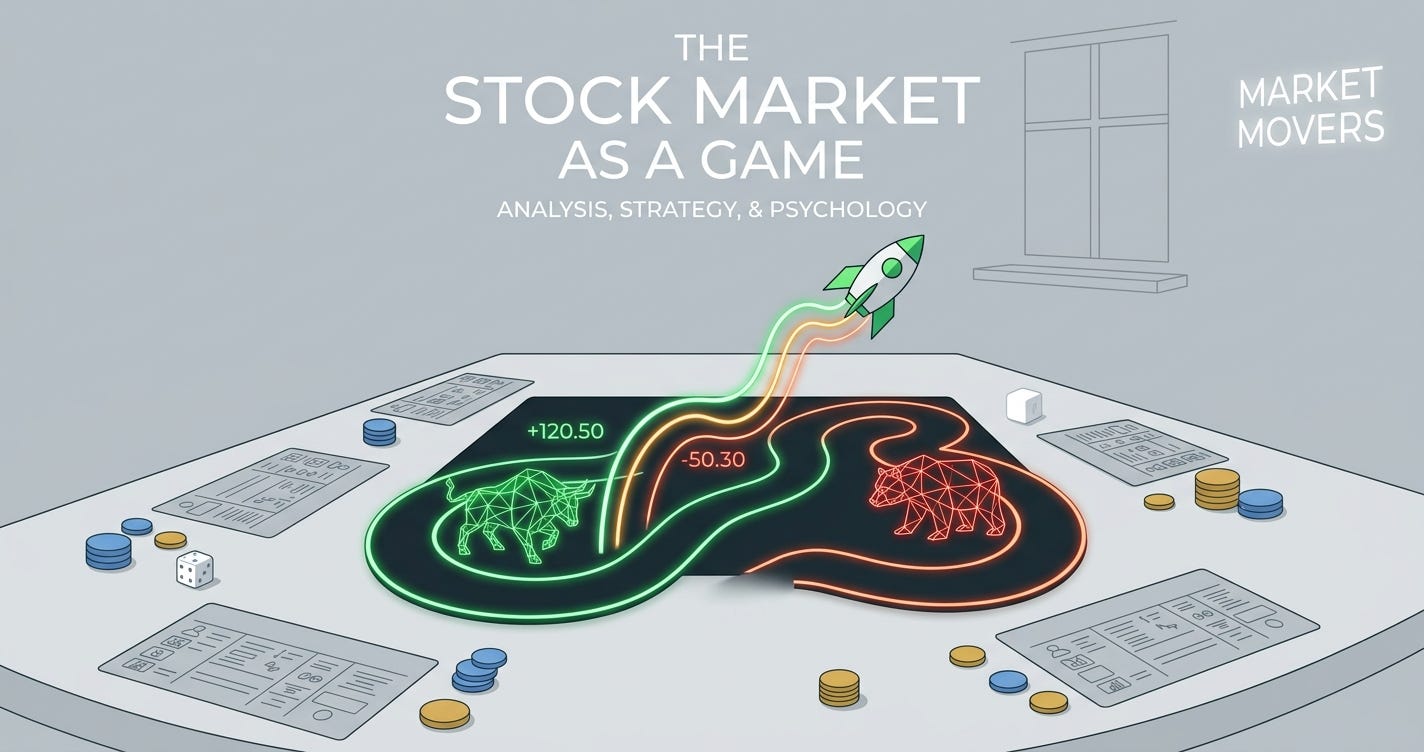
Just like in any game, there are rules, an ultimate goal, and a wide variety of players with their own strategies and approaches. There are losses and rewards, excitement and emotions, as well as incredible rises and falls.
Here and below, I will use abstractions or simplifications to explain complex concepts.
This game is very complex and dynamic. The actions of each player affect the outcome of the game itself—some have a bigger impact, others smaller. The intermediate result changes very quickly, and new variables in such a game can appear unexpectedly fast, only to disappear without a trace.
For some, this game is a hobby or entertainment; for others, it is a way to get an adrenaline rush. Some view this game as a way to save for old age, while for others, it is just like any regular business.
What does this game mean specifically for me?
I have a main job working as a software engineer, so I cannot say that this is my business. I do not invest very large sums into individual stocks, so the game is definitely not just entertainment for me. I invest a lot of time into it and dig very deep, so I cannot say it is just a hobby either.
Sometimes I feel like a detective. I search for the ideal candidate (stock) out of thousands based on various clues, both direct and indirect. I study all kinds of evidence: company reports,
news, press releases, industry and sector sentiments, behavior of individual players, footprints on charts, patterns, and interconnections. And when I find such an ideal candidate (stock), I ultimately get a bounty on its head.
I know, I know, it sounds very strange, but it depends on what you compare it to. That’s all for today, to be continued.